
What are dental crowns?
Dental crowns are something like a shell made of different materials, and it almost actually acts like a helmet or like a jacket around the tooth. It is a shell which is made of different materials, typically nowadays with tooth-colored materials. It's a little bit much stronger than porcelain material, and it actually covers the tooth entirely around 360 degrees. Just like a helmet on our head, a crown goes on the tooth like that
Dental crowns work, once they're placed on the tooth, just like your natural tooth, whether it's on your front tooth or on your back tooth. They're going to function like you had your normal tooth, like a natural tooth.
A dentist might recommend dental crowns in different case scenarios:
One of them could be that if the tooth had a large cavity and the tooth is hollowed out, if it's left like that it will break. The dental crown, as we talked before, will cover up the tooth and just hold it together, not letting it break. That could be one scenario.
Another scenario could be that if you already have a fractured tooth, part of the tooth broke off, whether it's half of the tooth or more than half of the tooth, then the dentist will recommend a crown so you can keep your tooth in your mouth. Dental crowns help you keep the tooth in the mouth in these kinds of scenarios where there's still tooth structure, enough tooth structure is there, we can strengthen that and make sure we can keep your tooth in the mouth.
Another scenario could be that if somebody previously had a crown on the tooth and that crown broke off, or the patient got some cavity under there, we're going to remove the old crown and place a new crown on top of that.
What are the different kinds of dental crowns available and when will dentists recommend you a certain kind of crown?
There are different kinds of dental crowns based on the materials and also, actually, how the crown is made, how much surface it covers. A full crown will cover, as we talked before, a whole 360°.
There's another type of dental crown that we call a three-quarter crown, which will cover three surfaces and a little bit of another surface towards the inside of the mouth, not the whole tooth entirely. Those are the different kinds of crowns, and based on materials, nowadays we use mostly tooth-colored crowns. They are made of zirconia material, or we could have crowns which are made with metal underneath, and there's a porcelain covering on top. In your mouth, it will look just like your natural tooth.
Another kind, not as common nowadays, could be a gold crown. Your dentist will recommend what kind of crown is best in your scenario based on clinical findings, and they will take a look at where that tooth that needs the crown is in your mouth. Based on that, they will recommend the material for that crown, and it could be in a more aesthetic area, so they're going to choose the crown that is going to look very natural. It's going to look just like your natural tooth. The light is going to pass through. It's going to look very, very aesthetic, and of course, it's going to be very functional and strong as well.
The dentist will make the recommendation based on where the tooth they are working on in the mouth is, how much tooth structure is still available to them, and the general strength of the tooth that is remaining there, and whether the tooth has a root canal on it or not. Those are the different kinds of scenarios that play a role, and the dentist will decide what crown material and what kind of crown is best in your situation.
How long do dental crowns last and what factors affect their longevity?
Dental crowns can last as long as 30 years. I have seen patients who have had crowns done 30 years, 20 years, 25 years, 35 years ago. The factors that affect the longevity, one of the main factors is hygiene. If the tooth structure is kept clean, there's no cavity forming around the crown. The crown can last you, as I said, anywhere from 10 to 40 years.
The biggest factor that causes patients to end up needing a new crown or to end up losing the tooth is the development of a cavity around the crown, because a cavity can still develop around where the crown is sitting on the tooth. You want to make sure that the tooth is kept very clean, like the way you're cleaning other natural teeth, so there's no buildup of bacteria, what we call plaque, on the tooth. That's one of the biggest factors.
Other factors could be that if somebody is grinding heavily, they can break the crown. Or if somebody develops severe gum disease, their entire tooth has to come out. Those are some of the factors that play a role in the longevity of the crown.
What should I expect when getting a dental crown from starting to finish?
There are a few steps involved. The very first thing would be that your dentist will numb you, making sure that you're comfortable. The second step is to take a mold of the tooth where we're going to need a crown on the tooth. That way, we can make you a temporary crown before you go home, as the lab makes a permanent crown in most cases. Sometimes dentists can make their crowns in-house, too, but not generally.
I'm going to be explaining here a process where the dental crown is made by the lab. First thing would be, again, the dentist will numb you, explain all the risks and benefits and the importance of the crown, why you need the crown, how it's going to benefit you, and then they will do what we call a temporary mold, take the color, what color we want to use, because we can do beautiful colors now, we can match your adjacent teeth exactly. We'll take the color for the tooth, and then the dentist will go into removing any decay, any cavity that's there in the tooth, or if there's any broken filling, remove that too. Get it really nice and clean.
Then we will fill it back in with a very strong base material. That way, it's not an empty shell. It's strong from the inside as well. Then we will shape the tooth.
Nowadays, at Smiles By The Sea Family Dentistry, once the tooth is shaped up for the crown, we typically doing scanning. It's a very cool machine, a 3D scanner. No goopy impression taking for that because we have to hold it for a long time. We will do the scan, and the scan goes to the lab, and the lab makes a permanent crown. Then we will fabricate your provisional crown, which we call a temporary crown. You will have it for about 2 weeks in your mouth. We will put that temporary crown on, give you all the instructions to follow, and you will come back two weeks later to put the permanent crown on. That is basically the procedure from start to finish for a dental crown.
What are the benefits of dental crowns?
The benefit of a dental crown is that dental crowns help you keep your teeth in your mouth. As we talked before, if the tooth is fractured, by doing a dental crown, you can still save your natural tooth.
There are so many benefits of saving a natural tooth. One of the biggest benefits is that it's your own tooth in your mouth. You can feel when you're eating, and you can enjoy good foods. Also, when the tooth is kept in the mouth, your bone also stays on it, because when the tooth comes out, your bone shrinks, it impacts the other neighboring teeth, they tilt in, and a whole cyclic role starts happening. We stop that process if we are doing the crown. Your tooth stays in your mouth, and your entire dentition is basically saved like that.
If you're getting a big filling, what happens is that if the tooth is already weak and we are putting a very big filling, every material has an indication for where it can be used, how successful it will be in that area. If the tooth is very vulnerable, it's weak, it's already fractured, and we're putting a filling on, we are really not strengthening that tooth. We're not really holding up the tooth, as we talked before, like a jacket. It's not holding the tooth together. You're leaving the tooth at a very high risk of fracturing. When we put a big filling on the tooth, the tooth is already weak. As you use it for chewing, the tooth can break off. That's why we recommend a dental crown in comparison to a big filling, to make sure that the tooth does not fracture.
At the same time, a dental bridge will be needed if the tooth comes out, as a replacement option. But in that replacement option, we're also going to need to cut down the two surrounding teeth, which could be very healthy teeth. By saving a tooth with a crown, you can avoid taking the tooth out. You can avoid cutting other teeth. That's the biggest benefit of a dental crown: to be able to help you save your natural tooth.
Are there any disadvantages or risks of getting dental crowns?
Depending on your case scenario, in most cases, it's actually the opposite: advantageous and beneficial. That's why the crown is being recommended. But some of the disadvantages, which are kind of on the lower side, are that we are cutting the tooth structure if your nerve is still alive.
Some patients might feel some sensitivity for a certain amount of time when they're going through the procedure. Sometimes they can feel some achiness, or they can feel a bit of tension in their jaw because they were open for the procedure. As I said, the tooth could be sensitive for some time, and we are cutting the tooth structure. That's kind of the disadvantage, that we are removing some of the tooth structure.
The risk with a dental crown is more aligned with the disadvantage. The risk is that you might have some sensitivity after the tooth if the nerve is still alive in the tooth, and the tooth can end up needing a root canal. That's the risk, that you might end up needing a root canal on the tooth.
Why do you usually need a dental crown after a root canal?
When the root treatment is done, we are basically removing the nerve, and that nerve canal is filled with the root canal filling material, which is a special material used to fill that canal where the nerve actually was living before. Since we are basically cutting down the blood supply to the tooth, and the nerve is taken out as well, the tooth stays in your mouth, but it becomes brittle over time, and that also leads to a very high risk of fracturing the tooth because it's essentially a dry tooth in your mouth, and we are still using the tooth. It is still functioning, it is taking the load, but it's not as strong anymore as your natural live tooth. That's why the majority of the time, the dental crown is recommended to hold it together.
Almost as we talked about before, like putting a helmet or a jacket over your tooth, so we can hold it together so it doesn't break apart. That's one of the main reasons why a dental crown is recommended in the majority of cases after doing a root canal, to avoid fracture of the tooth.
How much do dental crowns cost and what factors affect that cost?
The cost for dental crowns can vary depending on where the crown is in your mouth: front tooth, middle tooth, or back tooth. It will also vary based on what kind of material is being used. The cost will be different based on that, and what factors will affect that are, again, the same factors, and also if you have dental insurance, if you have a benefit that your insurance provides you toward the crown, that may reduce your co-payment out of your pocket if insurance is helping you out some toward that cost.
Nowadays, there's a lot of financing available. Patients are very easily able to afford the crowns and be able to save their teeth, keep their teeth for the rest of their life by using, if theyhave any benefit from dental insurance, or there are many financing options available, with interest, without interest, with very low payments. Many different options are available, and patients are being helped these days to be able to keep their teeth.
Want to learn more? Call Smiles By The Sea Family Dentistry at (603) 634-9445 or email [email protected]. Our team is happy to answer your questions and help schedule your visit.
What are dental crowns?
Dental crowns are like a helmet around a tooth. It covers a tooth 360 degrees all around, and it's a restoration that helps restore the tooth structure back. It's used if someone had a fractured tooth, a big filling that broke off, a big cavity that had to be taken out, or had a root canal treatment. It helps to restore the function of your tooth so you can continue to use it.
What are the alternatives to dental crowns?
Some of the alternatives could involve doing a very big filling on a tooth.
What types of dental crowns are there?
There are many different kinds of dental crowns available. One common type is a tooth color material matching crowns, which we also call ceramic crowns. They are made of material that is tooth colored. Another type is a crown with two different kinds of materials, metal underneath and a layering of porcelain on top. There is also a pure gold crown, which is a combination of different metals, but we call it a dental gold crown.
Is a dental crown necessary after a root canal?
A dental crown is necessary most of the time after getting a root canal treatment. This is because after getting a root canal treatment, the nerve is taken out, so there is pretty much no supply, nerve supply to your tooth, so the tooth becomes brittle over time. The crown helps you maintain the tooth for a much longer time.
What is involved in the dental crown procedure?
The dental crown procedure could be a two-step process. First, your dentist will shape off your tooth so you're able to receive the crown on top. We take a little replica of the tooth and get you a temporary crown that you will be wearing while the lab is fabricating your final crown.
During the procedure, you will be administered anesthesia before we begin. The process involves taking a matrix, selecting the appropriate color, and shaping the tooth. Subsequently, we perform a scan—either a 3D digital scan or a final impression of the tooth. Following this, we create a temporary crown, place it on your tooth, and ensure a proper fit. Throughout this stage, we check your bite and ensure you can floss comfortably with the temporary crown.
Meanwhile, the lab works on fabricating your permanent crown. Once ready, you return for the next visit. At this point, we remove the temporary crown, clean the tooth, and place the permanent crown. We conduct thorough checks, including an x-ray, to confirm a precise fit. Our checklist ensures that the crown fits well, allows for easy flossing, and enables comfortable biting. We use permanent cement to secure the crown in place. It's important to note that the dental crown placement process is designed to be painless, as we ensure you are fully anesthetized. We utilize advanced tools to keep you completely numb, ensuring a comfortable experience throughout the procedure.
Does the dental crown placement hurt?
The dental crown placement does not hurt, and it should not hurt, because you will be fully anesthetized. We have all the tools necessary to make sure you are fully numb.
Are there any consequences for getting a tooth crown?
There are no bad consequences of getting a tooth crown done. The reason you're getting a crown done is so that you can enhance the life of your tooth. Sometimes patients may have some sensitivity after because the tooth is reshaped, but overall there are no long term bad consequences.
Is it worth putting children's teeth in crowns?
Yes, if they are needed. The reasons for needing a crown could be because of a break or a large cavity. If it's needed and it's going to help maintain the tooth and restore it to function well and stay in the mouth longer, then it is good to do it.
Do crowns look like normal teeth?
Yes, the crowns do look like normal teeth. With the technology we have available, we are able to match the shape and the color of the crown to the neighboring teeth.
Can you get cavities on crowned teeth?
Cavities can happen on crowned teeth. They could happen underneath the crown or most of the time along the gum line.
How long can you expect a dental crown to last?
Dental crowns can last 20, 30, 40 years or even a lifetime. This depends on how well they are taken care of and if regular dental visits are maintained.
Does insurance cover dental crowns?
It really depends on what kind of dental insurance you have. If your policy has that coverage, then yes, they can be covered.
How can I schedule an appointment to get a crown?
You can call our office and you will have to see either myself or my associate doctor. We will take an x-ray, check it out, explain the procedure and the outcome, and then you can get an appointment scheduled for it. The number to call is (603) 634-9445.
Porcelain Crowns
Restore and Protect Your Damaged Tooth
Porcelain crowns restore and protect damaged teeth while also beautifying them, making this a treatment that fits in both the restorative dentistry and cosmetic dentistry categories. At Smiles By The Sea Family Dentistry, we create long-lasting, customized dental crowns designed to protect teeth and help them look natural, so they blend in with the rest of your smile.
Problems Fixed By Porcelain Crowns

A dental crown – sometimes called a cap – is designed to fit over a damaged or unsightly tooth to make it stronger, function properly, and look better. Crowns are usually made of porcelain because the material is so durable and can be designed to look just like the rest of your teeth in color and shape.
There are many oral health circumstances that call for a crown, including:
- Tooth decay: If the size of a cavity is so large that a large amount of tooth structure must be drilled away to remove the decay, there will not be enough enamel to support a tooth-colored filling. A crown protects the treated area and the rest of the tooth.
- Infected tooth: When a tooth must undergo root canal therapy because of a deep infection, there will be enamel removal and the structure of the tooth will be compromised – unless it is covered by a customized crown. This double solution also protects the tooth from extraction, and it is always your dentist’s goal to preserve natural teeth whenever possible.
- Fractured tooth: A cracked or chipped tooth is open to bacteria and food particles, which means infection and decay are likely if treatment is not pursued. Topping this problem tooth with a crown prevents further damage and restores the tooth to full strength and beauty.
- Weak tooth: When a tooth is weak because of age or worn enamel, it is susceptible to decay and damage. A crown makes a weak tooth tough and protects it from breaking down, while also safeguarding neighboring teeth.
- Misshapen tooth: An unsightly tooth that is misshapen or oddly sized can be built up to the right shape and form by a personalized porcelain crown.
- Stained tooth: Sometimes, a discolored tooth cannot be whitened, but you certainly wish it would blend into the rest of your teeth. By covering it with a crown you get a sturdy, natural-looking solution.
The Porcelain Crown Process
Getting a porcelain crown usually takes two visits to your Hampton dentist.
Here is what you can expect:
- Preparation: At your first dental visit, the tooth in question will be prepared for a crown. Decay will be removed, if necessary. An impression of your mouth will be taken so the crown can be designed just for you by a dental lab.
- Patience: Once the instructions for your crown have been sent to the lab, it usually takes about two weeks for the restoration to be ready. Depending on the condition of the tooth in question, you may receive a temporary crown while you wait for the permanent one so your smile is not marred.
- Completion: Once the crown is ready, you will visit your dentist again, have the temporary crown removed, confirm the fit and look of the crown, and have it permanently bonded to your natural tooth and adjusted as needed.
Same Day Crowns
When you have a broken, damaged, or infected tooth that requires a porcelain crown, you want to rely on a dentist’s office that has the technology to create your restoration immediately. At Smiles By The Sea Family Dentistry in Hampton, NH, our office is home to the advanced CEREC system, which allows us to craft same-day crowns and restore your smile completely in the same visit.

What Is the CEREC System?
The CEREC system is a computer assisted design (CAD) and computer-assisted milling (CAM) system that produces sophisticated, customized dental restorations while you wait. This on-site technology is an investment that your dental office has made so it’s possible for patients to have whole smiles again quickly.
Benefits of a CEREC Same-Day Crown
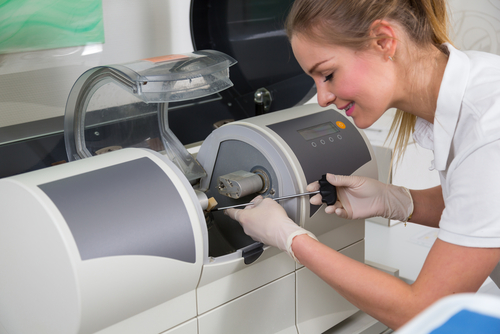
The relief of knowing that your Hampton dental office provides same-day crowns is the first benefit of CEREC restorations. Other perks include:
- Immediate repair: Off-site dental labs can take days and sometimes weeks to create a restoration. CEREC gives you your smile back in one day.
- Perfect fit: When specifications are sent to a dental lab to create a crown, the restorations usually come back accurately. There is no substitute, though, for the kind of accuracy your dentist delivers in both the fit and appearance of on-site customized crowns.
- Convenient: When you have a broken tooth or damaged crown, it’s a big deal. You want the problem fixed as soon as possible, especially so the issue doesn’t interfere with your professional or social life. CEREC eliminates the need for multiple dental visits, saving you time and stress.
- Natural-looking: You can be guaranteed a dental restoration that looks natural and blends in with the rest of your teeth in size, shape, and color.
Dental Problems a Same-Day Crown Can Fix
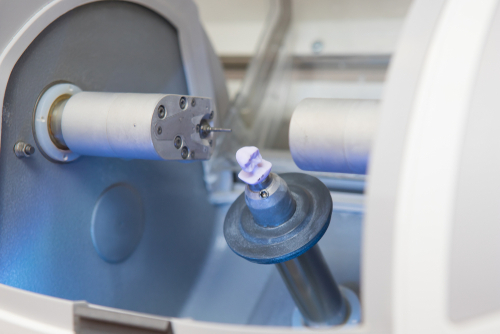
No one has ever experienced a dental problem at a convenient time, but it’s even worse when the repair you need to fix your tooth will take weeks to complete. CEREC same-day crowns eliminate this problem and can be used to repair multiple issues right away, including:
- Broken crown: Even the strongest crowns are at the mercy of age and become loose. They can also suffer damage because of biting down wrong on a food or from teeth grinding.
- Fractured tooth: When a tooth is broken, chipped, or damaged in some way, it is at risk of deteriorating quickly. Not tending to the problem creates space for food particles and bacteria to enter the tooth and cause decay or infection.
- Decayed tooth: Some tooth decay is so large that a tooth-colored filling will not work and a crown is needed as a more robust solution.
- Infected tooth: If you have a deep infection in your tooth, root canal therapy is necessary. Once the canals are meticulously cleaned out and sealed, the whole tooth needs to be covered with a crown for protection.
- Weak tooth: A deteriorating tooth or simply a weak tooth that is prone to breaking can be concealed and restored underneath a same-day crown.
- Unsightly tooth: If you have finally had it with an unsightly tooth that draws attention to itself because it is stained, oddly shaped, or flawed in some way, a customized crown conceals the problem immediately.
Are You A Good Candidate For Porcelain Crowns?
If you practice good daily oral hygiene by brushing and flossing, visit your dentist twice a year for a cleaning and checkup, and avoid using your teeth as tools to open something, your crown can last for decades. This versatile dental restoration is attractive, strong, and helps you have a more attractive and robust smile.
When you have a dental problem at a bad time, don’t despair. Contact Smiles By The Sea Family Dentistry in Hampton, NH, to schedule an appointment or an emergency dental visit and find out if you are a good candidate for a CEREC same-day crown. This state-of-the-art solution has saved many people from upended plans and smile embarrassment.